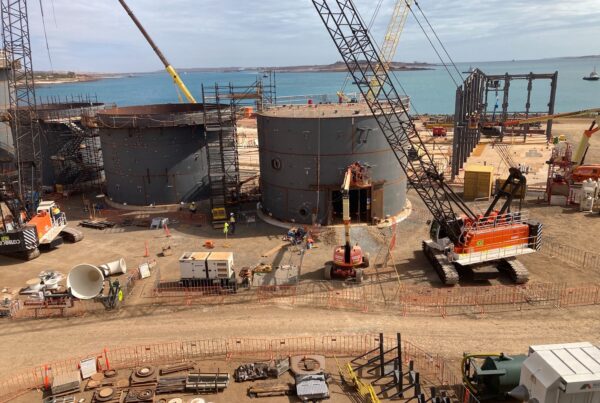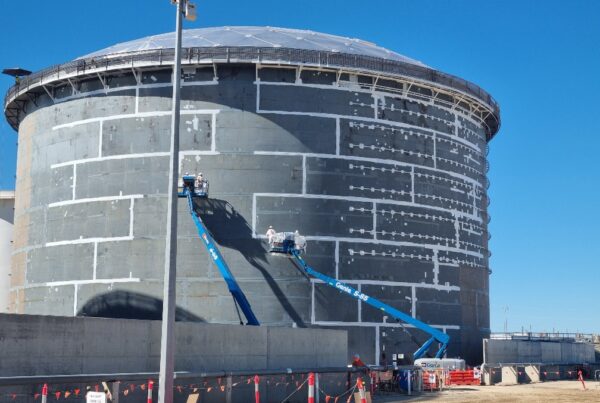
Pacific Quality Corrosion Control completed a comprehensive internal and external abrasive blasting and protective coating project on 3 large brand-new storage tanks, incorporating extensive surface preparation, high-build coating systems and detailed inspection and testing, providing long-term corrosion control in compliance with technical specifications throughout the works.
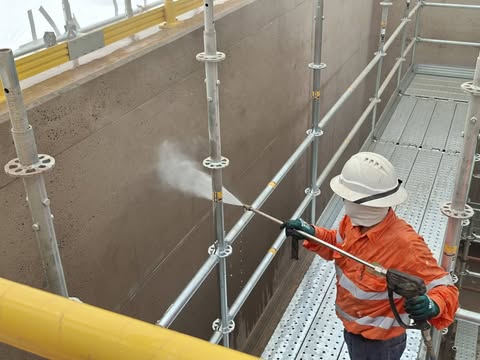
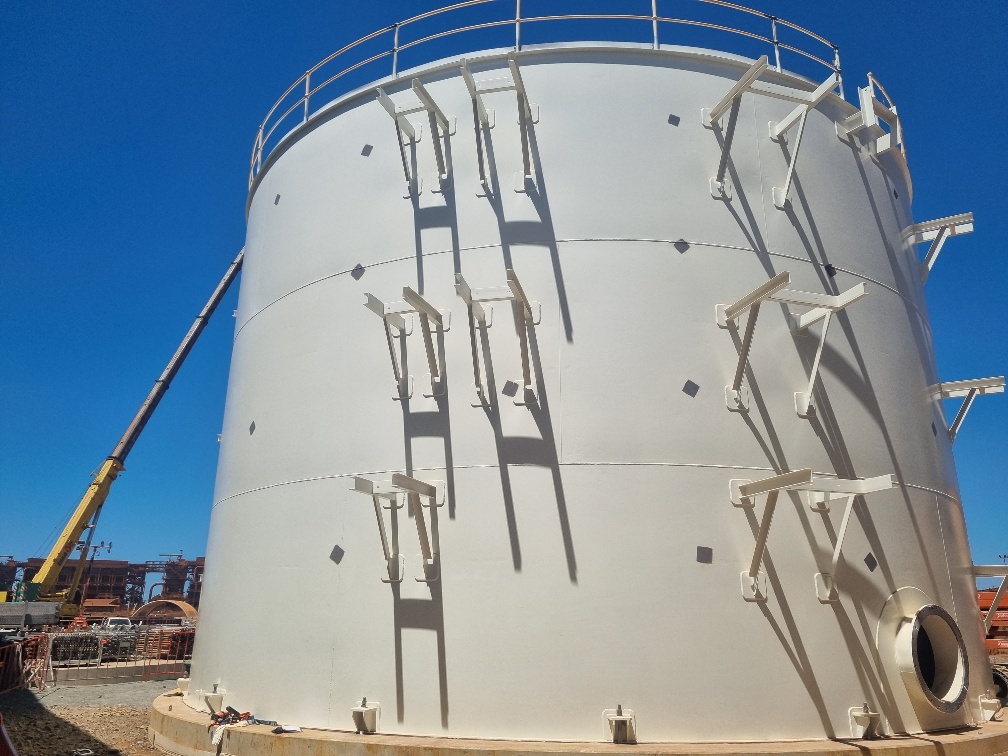
External work included wet abrasive blasting, followed by a multi-layer coating system of Zinc Rich Epoxy Primer, Multi-Purpose Epoxy, and Acrylic Polyurethane topcoat. Internal work included high-pressure water washing, Track blasting, dust extraction, abrasive blasting, and application of a high-build floor coating. Strict quality control inspections for were completed throughout.
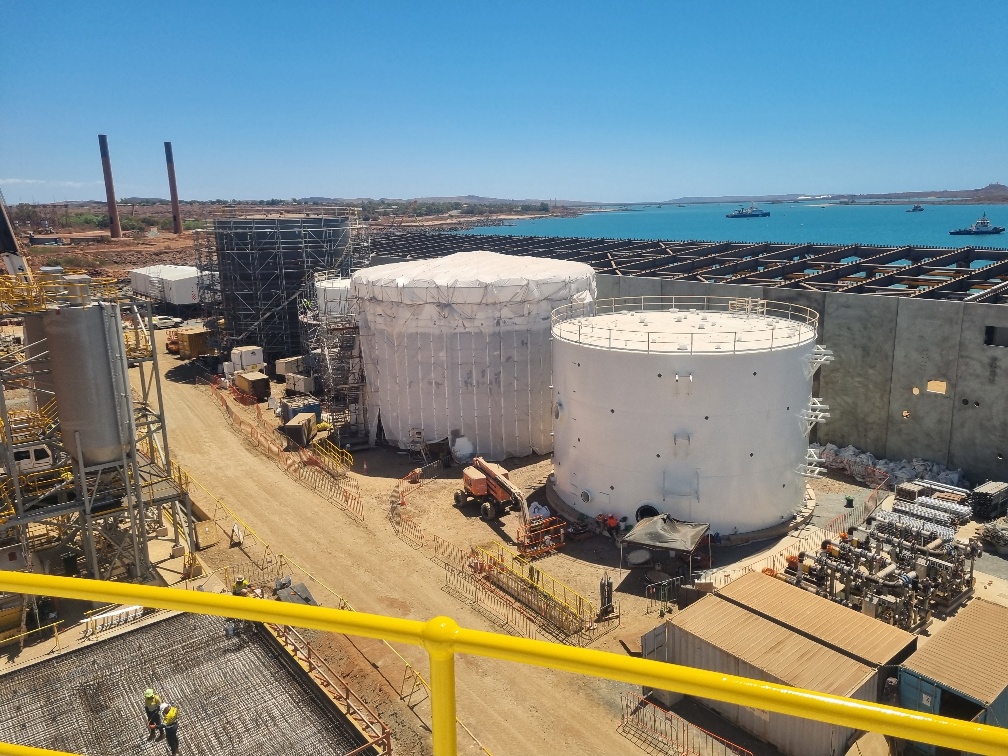
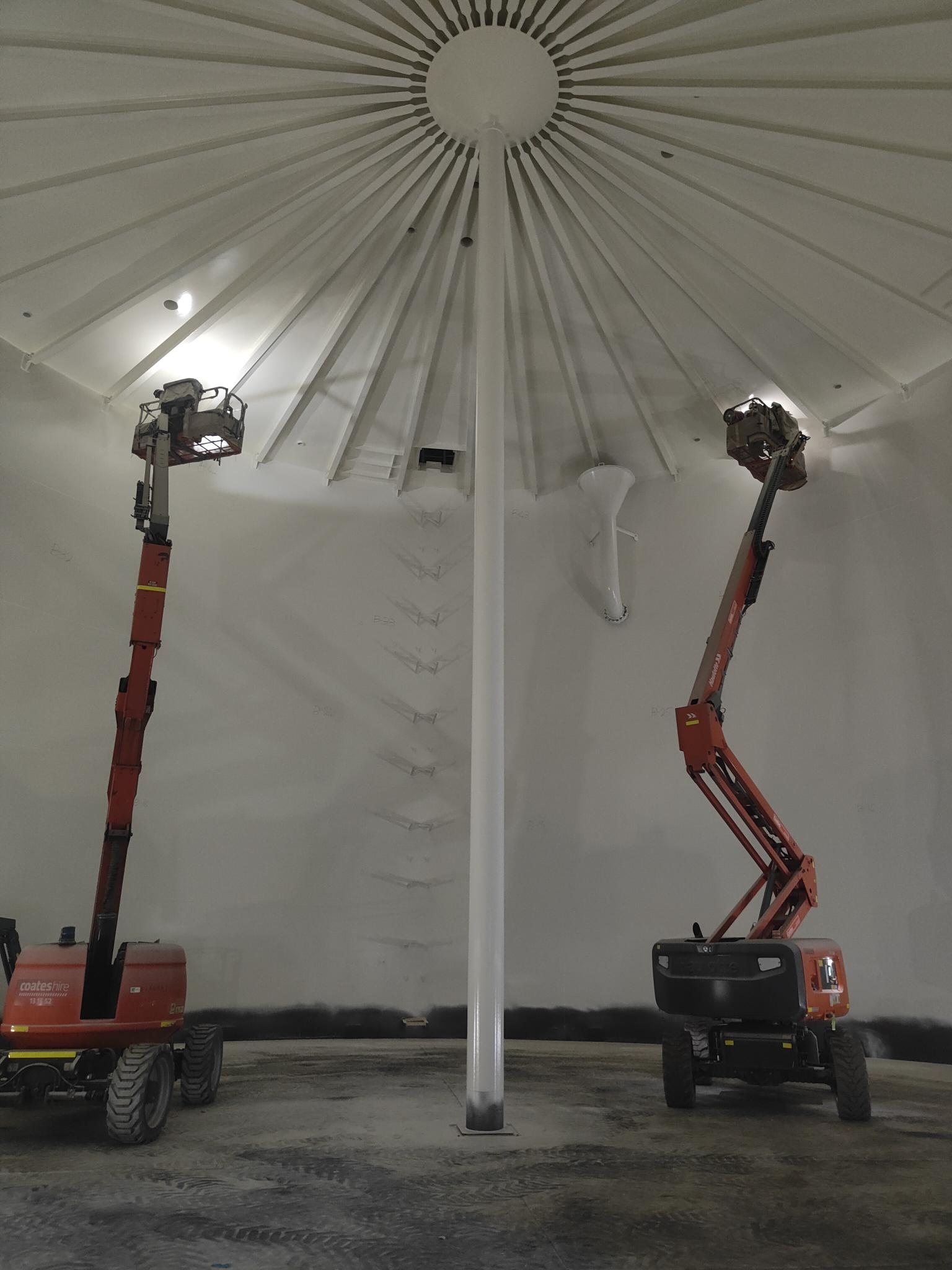
PQCC has completed the first stage of internal blasting and coating of five brand-new large storage tanks.
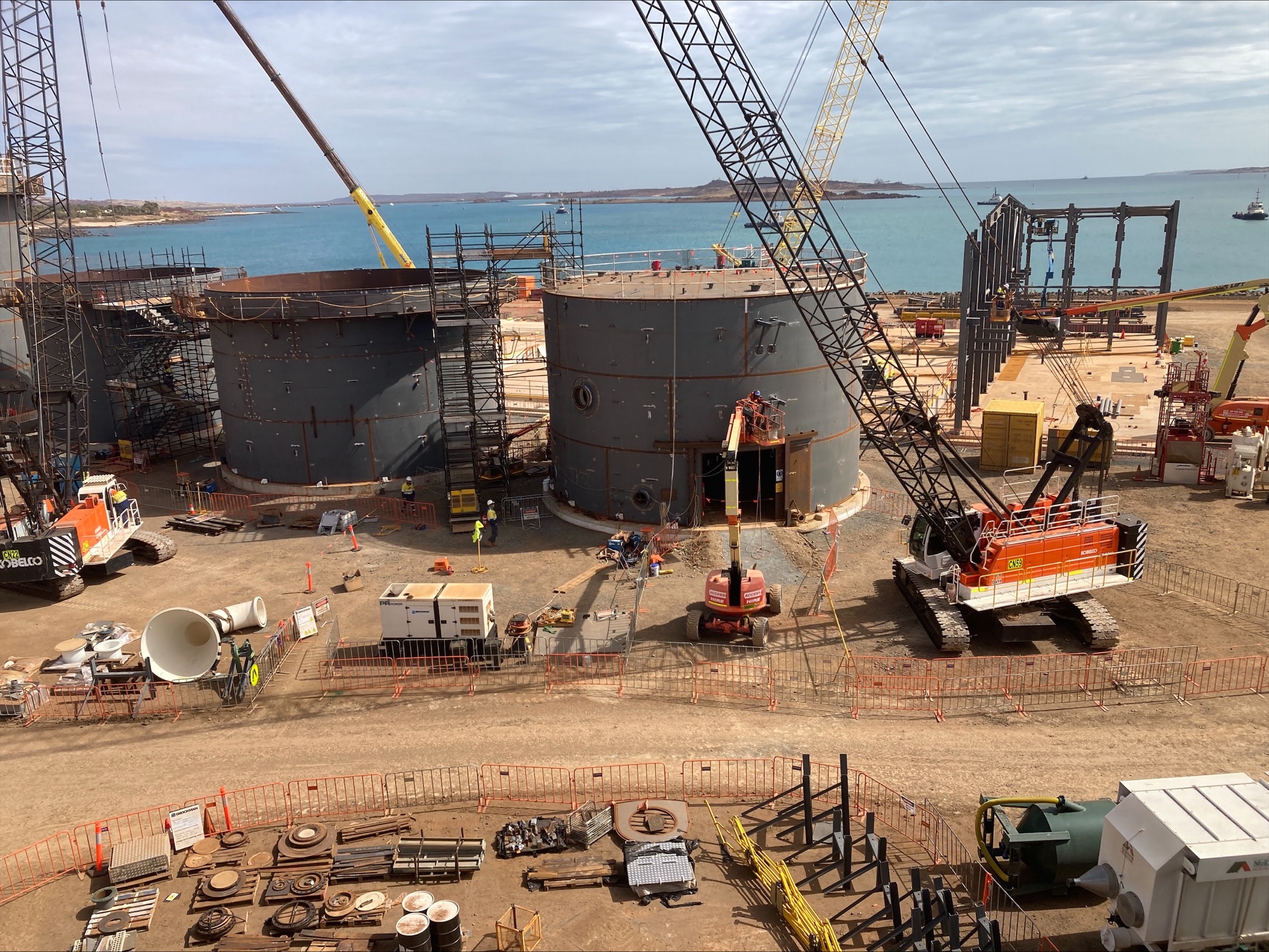
With tanks ranging from 11 to 25 metres in diameter and 10.6 to 15.8 metres in height, the scale of the work required careful planning, coordination and mobilisation of personnel, specialist equipment and temporary infrastructure.
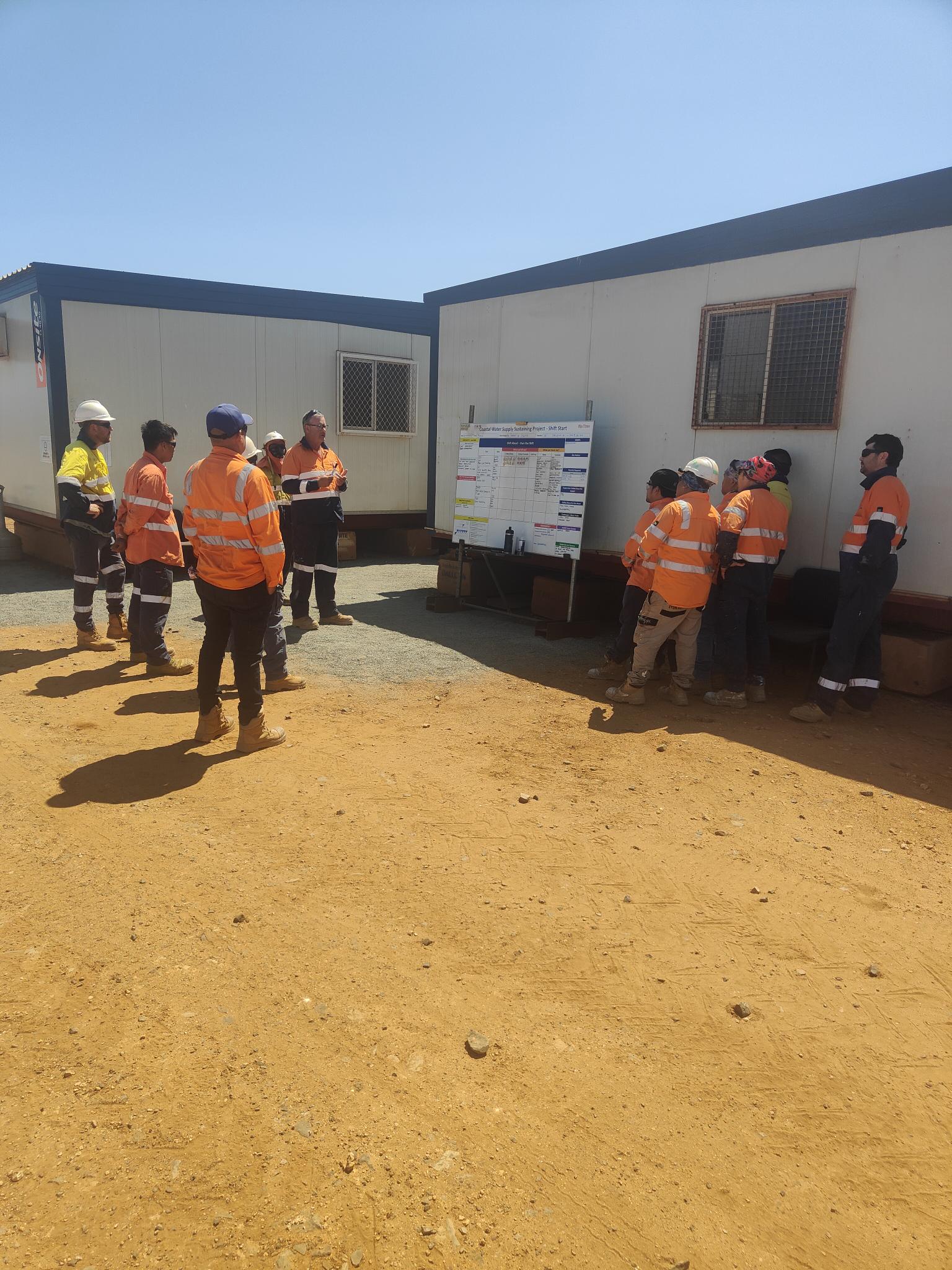
More than four semi-truck loads of heavy equipment were transported to site, with a crew of 16 personnel mobilised from three states to deliver the works. Coordinating the movement of equipment, personnel and resources to a remote Pilbara location added another layer of complexity to an already large-scale project.
Each tank was fully scaffolded and encapsulated to create a controlled environment for blasting, dust extraction and coating application. The setup supported a blasting workforce of up to eight blasters, while maintaining effective dust control throughout the encapsulated work areas.
Specialist equipment mobilised to site included:
- Mega Blaster
- 1600 CFM Compressor
- 5000 CFM Pneumatic Dust Extractor
- 12000 CFM Dust Collector
- 5000 PSI Pressure Cleaner
- Airless Spray Pumps
- 750 CFM Moisture Separator
Working conditions in the Pilbara presented their own challenges, with high temperatures and humidity influencing daily workflows and requiring careful consideration of work periods, breaks and heat management.
To help maintain a safer and more controlled working environment, air conditioning was installed within the encapsulated areas, while paint materials were stored in a climate-controlled DG container to maintain the manufacturer’s specified storage conditions.
Cyclone preparedness also formed an important part of the project planning, with measures implemented to ensure the site, personnel, equipment and temporary infrastructure could be secured and remain resilient during severe weather events.
From the initial mobilisation of heavy equipment and personnel through to scaffold and containment installation, abrasive blasting, dust extraction and protective coating application, Stage 1 demonstrates the planning, resources and specialist capability required to deliver complex tank maintenance projects safely and efficiently in challenging remote environments.
Related Projects